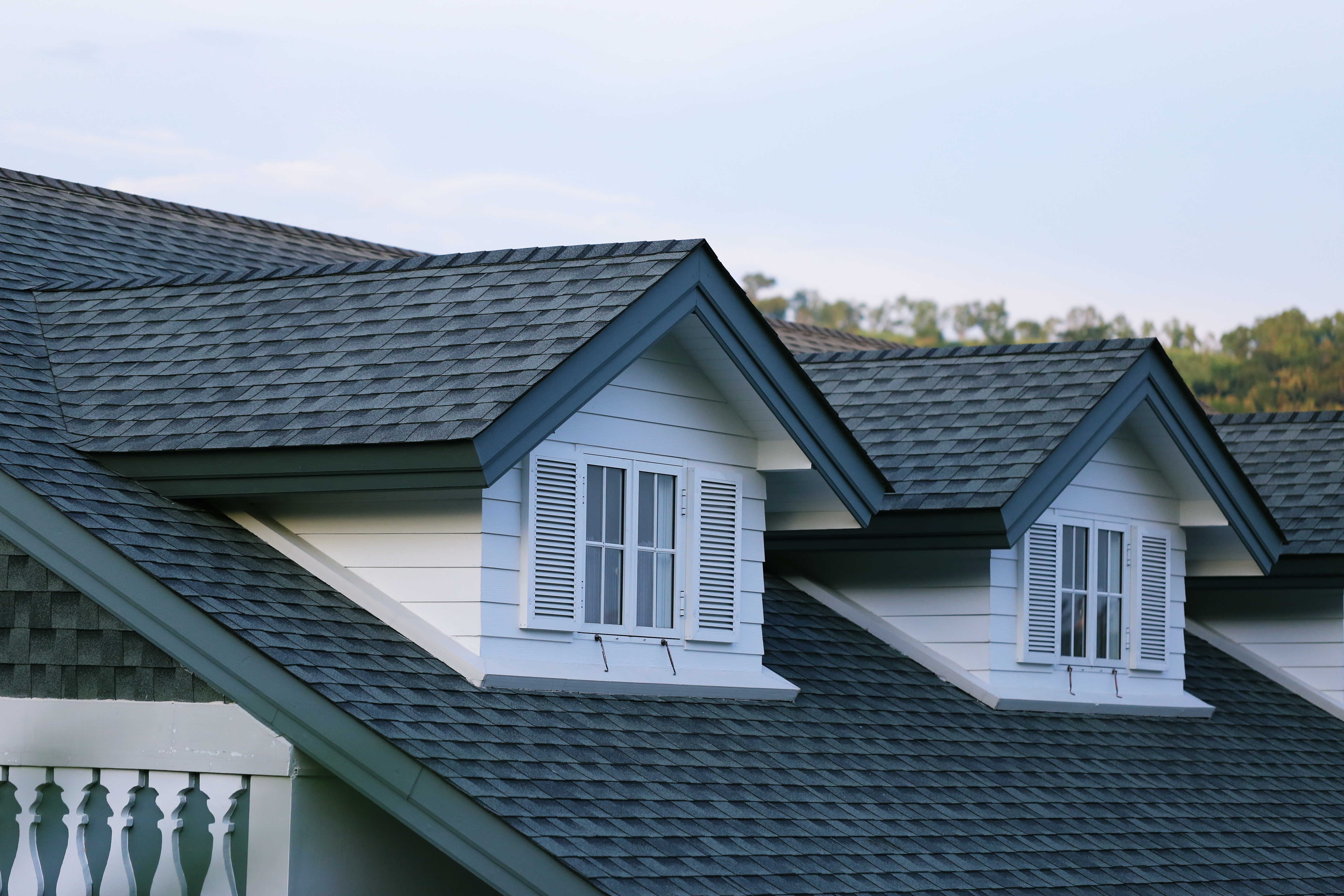
Shingle roofs, explained
The most popular roof in America — what 3-tab, architectural, and luxury shingles cost, how their impact and fire ratings work, and how long each lasts.
Asphalt shingles come in three tiers: 3-tab (cheapest, ~15–20 yrs), architectural (the popular mid-range, ~25–30 yrs), and luxury (premium look, ~30–50 yrs). They're affordable, versatile, and easy to install — which is why they cover most U.S. homes.
Roofing shingles are small, flat, overlapping pieces that together cover the whole roof. While they can be made from wood, slate, or metal, asphalt is by far the most common. Homeowners choose them because they're affordable, suit any architectural style, and come in a wide range of colors and textures.
The three types of asphalt shingle
3-tab shingles
The most cost-effective option, named for the three tabs per shingle. They give a clean, uniform, flat appearance and are quick to install and replace.
Architectural
Also called dimensional or laminate. Thicker and layered for depth and better waterproofing — the look of pricier materials without the cost.
Luxury shingles
Top-of-the-line designer shingles that mimic natural slate or cedar shake for a high-end look with less cost and maintenance.
What asphalt shingles are made of
Understanding a shingle's anatomy explains why quality and price vary so much. Every asphalt shingle is built from a few key layers.
The mat: fiberglass vs. organic
Fiberglass-mat shingles are today's standard — lighter, more fire-resistant, and longer-lasting. Older organic-mat shingles use a paper base saturated with more asphalt; they're heavier, costlier, and now rare.
Asphalt & granules
Waterproofing asphalt coats the mat, and a top layer of ceramic-coated mineral granules shields it from UV, adds color, and provides fire and algae resistance. Losing those granules is the classic sign of an aging roof.
Understanding class ratings
Shingles are independently rated on three things. Higher isn't always strictly "better," but the ratings tell you how a shingle performs against impact, fire, and wind.
- Impact (Class 1–4). Measures resistance to a dropped steel ball. Class 4 is the highest and best protects against hail — important in storm-prone regions.
- Fire (Class A–C). Class A is the most fire-resistant; Class C the least.
- Wind (Class A–F). Class A withstands 60-mph winds for two hours; Class F withstands 110-mph winds for the same period.
An insurance angle
Many insurers offer lower premiums for homes with higher-class impact-resistant shingles. The discount varies by provider and shingle class — worth asking about in hail country.
Cost per square foot
Cost is usually the deciding factor between tiers. Installed prices typically run:
| Type | Cost per sq ft (installed) | Relative labor | Typical lifespan |
|---|---|---|---|
| 3-tab | $3.70–$8.75 | Lowest | 15–20 yrs |
| Architectural | up to ~$12.25 | Moderate | 25–30 yrs |
| Luxury | $6–$30 | Highest (specialized) | 30–50 yrs |
Luxury shingles vary widely because they imitate many materials, and they often need more specialized labor — factor that into the total.
Shingle roof cost by home size
| Roof size | 3-tab | Architectural | Luxury |
|---|---|---|---|
| 1,500 sq ft | $6k–$13k | $8k–$18k | $12k–$30k |
| 2,000 sq ft | $7k–$17k | $10k–$24k | $15k–$45k |
| 2,500 sq ft | $9k–$22k | $13k–$31k | $18k–$60k |
| 3,000 sq ft | $11k–$26k | $15k–$37k | $22k–$70k |
Prices include tear-off and installation and shift with pitch, complexity, and local labor. See the full breakdown in our roof cost guide.
Pros & cons by type
3-tab
- Least expensive option
- Clean, uniform look
- Easy to install and replace
3-tab trade-offs
- Less resistant to severe storms
- Shorter lifespan than upgrades
Architectural & luxury
- Layered, dimensional look
- Better insulation & waterproofing
- Stronger wind & hail resistance
- Wide range of styles and colors
Trade-offs
- More expensive up front
- Longer installation time
- Luxury shingles are heavy
How to choose the right shingle
- Weather resistance. In harsh climates, architectural and luxury shingles handle wind, hail, and heavy rain better.
- Energy efficiency. Architectural and luxury shingles insulate and reflect more heat, trimming cooling costs.
- Aesthetics. 3-tab gives a plain, uniform look; architectural and luxury add dimension and can mimic slate or wood.
- Budget. 3-tab is cheapest up front; upgrades cost more but can pay back through durability and efficiency.
Installation & what to expect
An asphalt shingle roof is among the fastest to install — most are done in 1–3 days. Here's the typical sequence.
Tear-off & inspection
The old roof is removed and the decking checked for rot or damage, which is repaired before anything new goes down.
Underlayment & flashing
A water-resistant underlayment and new flashing around valleys, chimneys, and vents form the roof's true waterproof layer.
Shingles installed
Shingles go on from the eaves up, with ridge caps and proper ventilation completing the system.
Cleanup & final inspection
The crew clears debris, runs a magnet for stray nails, and walks the roof for a final quality check.
Maintenance & lifespan
With routine care — clearing debris and checking for damage — shingles last for decades. Watch for the most common issues: curling (from age, poor ventilation, or bad installation), cracking (from temperature extremes), and granule loss, which leaves the roof vulnerable.
Frequently asked questions
What are impact-resistant roofing shingles?
How long do roofing shingles last?
How much do roofing shingles cost?
What is the best type of roof shingle?
Do impact-resistant shingles lower insurance?
Can I put new shingles over my old roof?
What are the signs I need a new shingle roof?
Compare your options before you commit
See how asphalt, metal, tile, slate, and wood compare on cost, lifespan, and durability — then dig into 2026 pricing to plan your budget.